Higher education is undergoing a profound transformation. Universities need to develop new programs, micro-credentials, and online courses faster than ever, without increasing the workload of academic staff.
In response to this challenge, Fit Learning Systems has developed a proprietary methodology that accelerates the production of university eLearning content that can be accredited in ECTS, while maintaining academic standards and significantly reducing the time required from university experts.
A recent example of this model is the project developed with the University of the Basque Country (EHU), where 21 ECTS credits of cybersecurity training were produced in less than three months.

A development timeline that breaks with traditional models for creating university learning content.
The major challenge for universities: producing knowledge faster
The emergence of new learning formats such as:
• European micro-credentials
• Specialized online programs
• University continuing education
• Hybrid and digital courses
has multiplied the need to generate high-quality educational content.
However, the traditional course development model comes with several challenges:
• Long production timelines
• High faculty workload
• Difficulty scaling the creation of new programs
The solution is not to replace faculty, but to optimize the academic production process.

A model that reduces faculty workload by up to 90%
The methodology developed by Fit Learning redefines the role of the university expert within the content creation process.
Instead of taking on full production of training materials, faculty focus on three key tasks:
• Define the scope of the course and the academic outline
• Set the learning outcomes
• Validate the developed content
The Fit Learning expert team turns that knowledge into:
• Structured eLearning content
• Videos and learning capsules
• Simulations and practical case studies
• Accreditable interactive assessments
This model can reduce by up to 90% the time a university expert needs to dedicate to course development, freeing up their agenda without losing academic control.
Modular production of ECTS credits
One pillar of the model is the modular structure of content.
Each ECTS credit is designed as a collection of independent modules or units, based on microlearning and applied learning.
This architecture enables:
• Parallel production
Different modules can be developed simultaneously by multiple teams, significantly accelerating production timelines.
• Reusable courses
Units can also be consumed as standalone courses or micro-credentials, making reuse across academic programs easier.
• Scalability
Universities can build complete programs from existing modules, reducing development time and costs.
Practical learning with simulations and role plays
The pedagogical model combines:
• Structured content
• Practical activities
• Continuous assessment
Each module includes applied cases, interactive exercises, and professional simulations designed for learning through practice.
This approach turns learners into active participants in the learning process, improving understanding and transfer of knowledge to real professional contexts.

Automatic assessment through an AI tutor
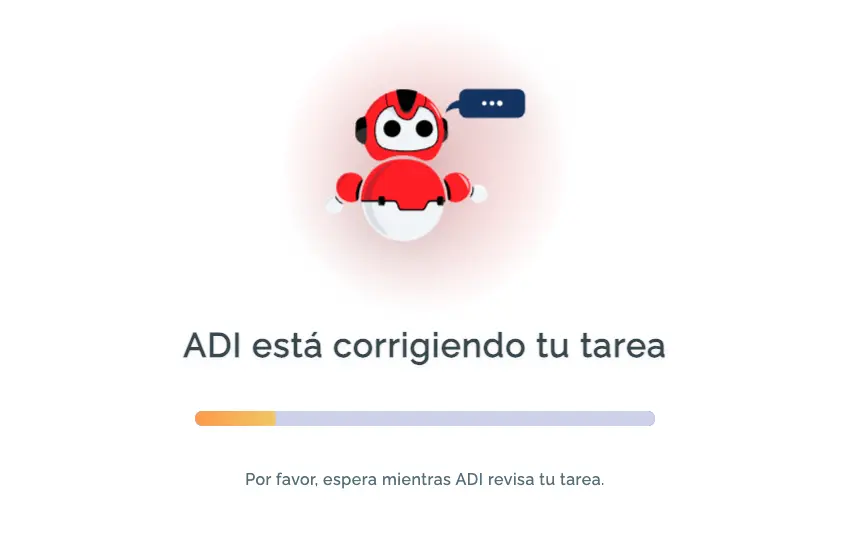
One of the most notable innovations of the model is the incorporation of AI-assisted assessments.
Tasks, simulations, and role plays can be automatically assessed by an AI tutor capable of:
• Analyzing student responses
• Evaluating performance in practical activities
• Providing immediate feedback
This makes it possible to create much more dynamic and personalized learning experiences.
Learning is no longer purely theoretical—it becomes interactive, measurable, and oriented to practical application.
A model designed to complement internal university teams
Many universities already have their own eLearning production teams. Fit Learning’s model does not aim to replace them, but to complement them and accelerate strategic projects.
Institutions can use this model to:
• Develop new online programs
• Produce micro-credentials
• Create specialized learning pathways
• Accelerate projects with short launch timelines
Fit Learning acts as a Learning Factory specialized in educational content production, able to scale course creation while maintaining academic standards.
The University of the Basque Country (EHU) case
The recent collaboration with the University of the Basque Country demonstrates the potential of this approach.
Thanks to modular methodology and parallel content production, it was possible to develop 21 full ECTS credits in under three months, within a cybersecurity training program.
The project combined:
• Interactive content
• Practical activities
• Professional simulations
• Intelligent assessments
The result is a replicable model that allows universities to accelerate new program creation without increasing faculty workload.
The future of university eLearning
Higher education is moving toward more flexible, modular, and digital models.
Universities that want to lead this transformation will need new content production methodologies that combine:
• Academic rigor
• Faster development
• Technological innovation
• Practical learning
Models like the one developed by Fit Learning Systems open a new path for institutions to produce knowledge at the speed the world now requires.
