The real impact of training in 2026 is no longer measured only by completed courses, but by the ability of learning to improve behavior, performance, and business results.
Today, almost any organization can know how many people accessed a course, how much time they spent, what percentage completed it, or what score they obtained in an assessment.
The problem is that having more data does not necessarily mean understanding better what is actually happening.
And that is one of the big questions of 2026: are we measuring activity, or are we measuring impact?
Measuring the real impact of training is not the same as proving value
For years, many training strategies have relied on indicators that are easy to obtain.
Number of completed courses.
Training hours.
Completion rates.
Test results.
Satisfaction surveys.
All of that is still useful.
But it is not enough.
Because a person can finish a course and apply nothing.
They can rate an experience positively and still not change the way they work.
They can consume content and still not improve their performance.
That is why, if an organization wants to measure the real impact of training, it needs to go one step further.
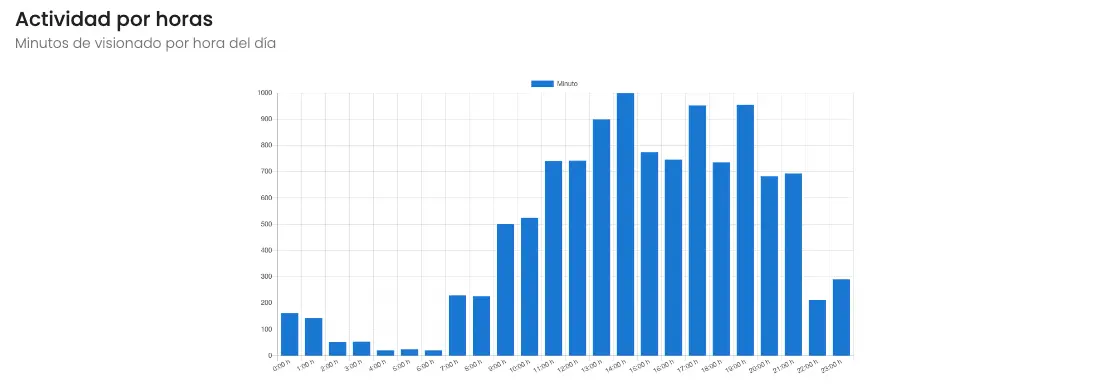
Real impact begins when learning moves beyond the platform
Training starts to generate real value when it produces something observable outside the learning environment.
When it helps people make better decisions.
When it reduces errors.
When it speeds up a person’s onboarding into their role.
When it improves compliance with a procedure.
When it strengthens a key business capability.
That is where the conversation changes.
Because then we are no longer talking only about consumed content.
We are talking about learning that translates into behavior, application, and results.
The five layers worth looking at
To measure better, it helps to think about training in five levels.
1. Activity
How many people access, how far they progress, and how they use the training.
2. Experience
How they perceive the proposal, whether it feels clear, useful, relevant, and easy to follow.
3. Learning
What they have understood, retained, or developed during the process.
4. Transfer
Whether that learning is actually applied in the workplace.
5. Result
What effect it has on broader business, team, or operational indicators.
The mistake appears when an organization stays only in the first two.
Because activity and experience matter, but they do not by themselves prove that training is changing something relevant.
Which metrics matter most in 2026
In 2026, measuring training well requires combining platform indicators with signs of real-world application.
Useful participation
Not only who enters, but who progresses with intention, returns, completes pathways, and maintains continuity.
Real progress
Not only completion, but growth in understanding, autonomy, or mastery of key content.
Application to the job
Whether the person uses what they learned in real situations, adopts new criteria, or improves execution.
Time to competence
How long it takes a person to reach an expected level of performance after a training process or onboarding.
Reduction of errors or incidents
Especially useful in compliance, operations, service, safety, or critical processes.
Impact on operational indicators
Speed, quality, consistency, compliance, productivity, or responsiveness, depending on the context.
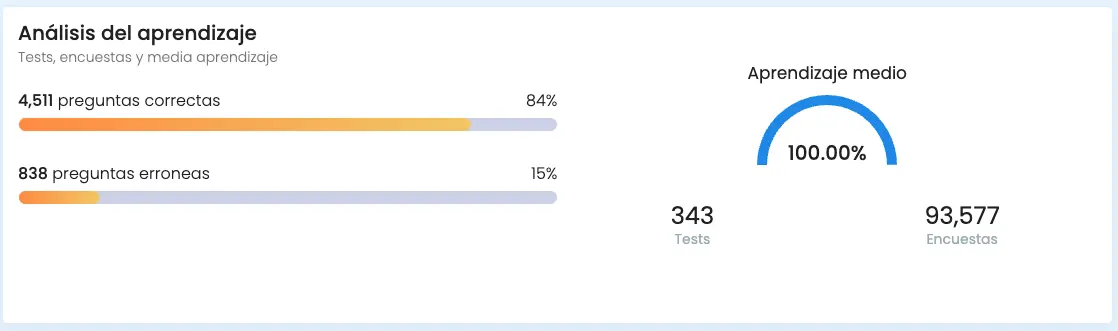
The real KPI is not always inside the LMS
This point matters.
Many times, people expect the platform alone to explain the full impact of training.
But the real value is not always inside the learning environment.
Very often, learning data needs to be connected with other indicators:
- performance
- compliance
- quality
- productivity
- onboarding
- customer service
- error prevention
That is where measurement gains depth.
Because training does not live in isolation.
It is part of a broader system of work, behavior, and results.
The role of analytics and AI
In 2026, the great opportunity is not only in collecting data.
It is in interpreting it better.
Analytics makes it possible to identify usage patterns, abandonment points, more effective pathways, or differences between groups.
And artificial intelligence starts to add value when it helps to:
- detect gaps
- anticipate dropout risk
- recommend reinforcement
- personalize pathways
- turn scattered data into actionable information
That changes the conversation significantly.
Because it is no longer just about looking at dashboards.
It is about making better decisions on what to reinforce, what to redesign, and where real impact is appearing.
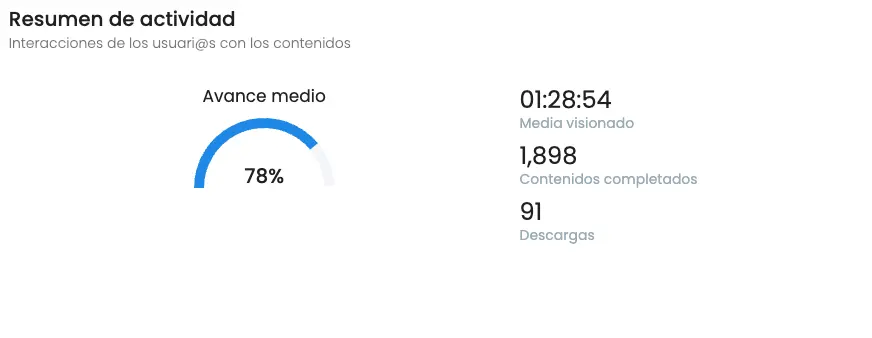
What it means to measure well
Measuring well does not mean measuring a lot.
It means measuring what helps answer relevant questions.
For example:
- Is training helping people do their job better?
- Is learning being applied?
- Are we reducing errors or accelerating the learning curve?
- Which formats generate more continuity and transfer?
- Which groups need more support?
- What is the relationship between learning and operational results?
When measurement answers these questions, training stops being seen as an activity and starts being read as a lever.
How we understand it at FIT
At FIT, we believe that measuring training should not consist only of recording logins or course completions.
It should help understand what is working, what is not, where value is appearing, and how the experience can be improved so that learning has a stronger real effect.
That is why the use of analytics, monitoring, and technology only makes sense when it helps connect training better with decisions, performance, and progress.
This approach connects with our vision of a learning ecosystem, with the design of memorable learning experiences, and with the use of AI to support learning when it truly adds value.
In addition, organizations such as the World Economic Forum have been underlining the importance of building capabilities and measuring their impact better in a context of transformation of work see report.
A final idea
Measuring the real impact of training in 2026 requires changing the focus.
Less obsession with what is easy to count.
More attention to what is really changing.
Less activity as an end in itself.
More applied learning as a sign of value.
Because in the end, training does not prove its impact when someone finishes a course.
It proves it when something improves afterward.
